1927 nm Thulium vs. CO2 Laser Resurfacing: What’s the Difference?
A practical comparison of 1927 nm thulium and CO2 laser resurfacing—what each can address, their recovery differences, and how to choose a treatment plan in Thousand Oaks.
Laser Skin Resurfacing
Understanding laser skin resurfacing
Laser skin resurfacing uses controlled light energy to improve the appearance of damaged or aging skin. Depending on the technology, it can help address pigmentation, uneven texture, fine lines, wrinkles, and other visible skin concerns.
The biggest distinction is between ablative and non-ablative lasers. Ablative lasers remove portions of the skin's surface to encourage renewal, while non-ablative lasers deliver energy into the skin without the same degree of surface removal. Both approaches can be effective, but the treatment experience, intensity, and recovery can look quite different.
What is a 1927 nm thulium laser?
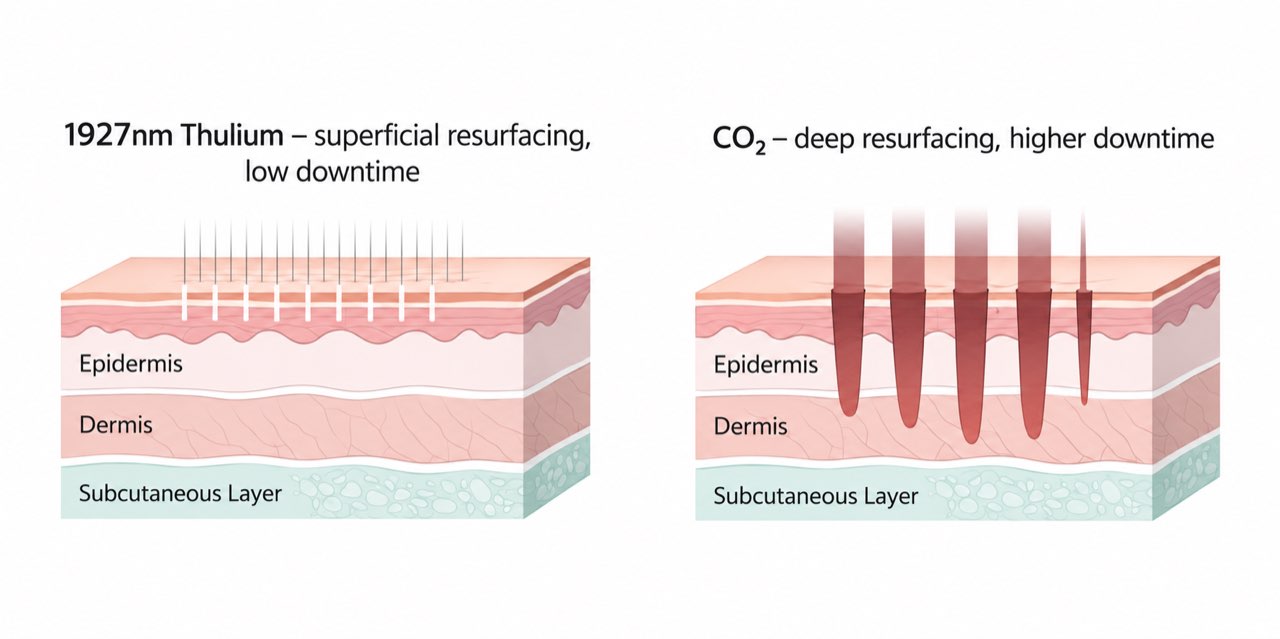
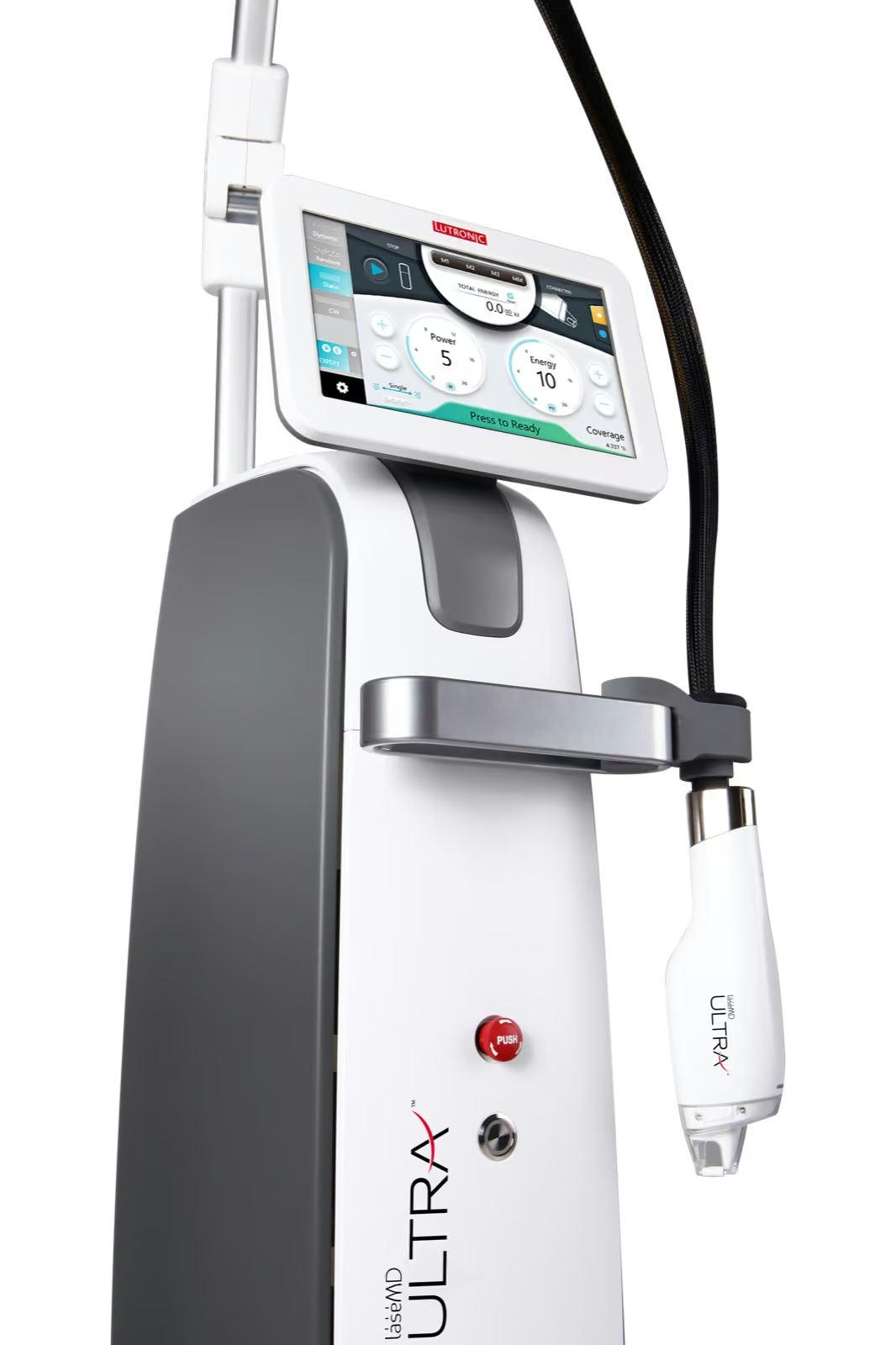
A 1927 nm thulium laser is a fractional resurfacing technology commonly used to improve visible pigmentation, sun damage, and uneven skin tone. At Corinne Aesthetics, Laser Resurfacing uses this wavelength to create controlled treatment zones in the skin and support its natural renewal process.
One of Ultra's advantages is its flexibility. Treatment intensity can be adjusted from a lighter skin refresh to a more targeted resurfacing approach, depending on your skin concerns and goals. 1927 nm thulium resurfacing may help improve the appearance of sun spots, age spots, freckles, uneven pigmentation, dullness, and surface texture.
Because this technology is generally used for less aggressive resurfacing, it can be an appealing option for patients who want visible skin improvements without the recovery associated with more intensive ablative treatments.
What is CO2 laser resurfacing?
CO2 laser resurfacing uses a different wavelength, typically 10,600 nm, to remove controlled portions of skin tissue and stimulate remodeling. It is an ablative treatment, meaning it can work more intensively on the skin's surface and underlying tissue.
CO2 resurfacing may be considered for more pronounced wrinkles, certain acne scars, deeper textural irregularities, and more extensive skin damage. However, more intensive resurfacing generally comes with a longer recovery period and additional aftercare considerations.
CO2 lasers can also be used in fractional treatments, where only selected portions of the skin are treated. The exact recovery depends on the device, settings, and treatment intensity.
1927 nm thulium vs. CO2: What’s the main difference?
The most important difference is not simply which laser is stronger. It is how each technology interacts with the skin and what it is designed to address.
1927 nm thulium technology focuses on fractional skin renewal, particularly for superficial pigmentation and tone concerns. CO2 technology removes controlled areas of tissue and can provide more intensive resurfacing for concerns that may require deeper correction.
Thulium resurfacing is often considered when the primary goals are improving sun spots, uneven pigmentation, dullness, and surface texture. CO2 resurfacing may be more appropriate for deeper wrinkles, certain scars, and more pronounced textural changes.
Laser Resurfacing is designed with minimal downtime in mind. Temporary redness, dryness, and a rough or sandpaper-like feeling can occur as the skin renews. CO2 resurfacing typically requires more recovery, particularly with intensive treatments, and redness, swelling, peeling, and more involved aftercare may be expected. Recovery varies significantly with the treatment settings and your individual skin response.
Some people may benefit from a series of gentler treatments, while others may be candidates for a more intensive procedure. The right plan depends on your skin, the changes you are hoping to achieve, and the amount of downtime you are comfortable with.
Is 1927 nm thulium better than CO2?
Not necessarily. If your main concerns are sun spots, uneven pigmentation, dullness, or early changes in texture, a 1927 nm thulium treatment like Ultra may be a good place to start. If you are dealing with deeper wrinkles or more significant scarring, a provider may recommend evaluating more intensive resurfacing options.
It is also important to consider your skin tone, sensitivity, history of pigmentation, and how your skin responds to treatment. Melasma, for example, requires a particularly thoughtful approach. Although 1927 nm thulium lasers have been studied for pigmentation concerns, laser treatment is not appropriate for every patient and pigmentation can recur or worsen.
The goal should always be to choose the treatment that makes sense for your skin, rather than simply choosing the most aggressive option.
What should you expect from Laser Resurfacing?
One of the advantages of Ultra is the ability to customize the treatment experience. Depending on your goals, your provider can adjust the treatment intensity for a lighter skin refresh or a more targeted approach to pigmentation and texture.
During treatment, you may experience warmth, tingling, or some discomfort. Afterward, temporary redness and a dry or rough texture can occur. Some patients may notice improvements after one session, while others may benefit from a series. Results and recovery depend on the treatment settings, your skin, and the concerns being addressed.
Your provider will help explain what to expect before creating your treatment plan.
How do you know which laser is right for you?
Before choosing a resurfacing treatment, consider whether your main concern is pigmentation and uneven tone or deeper wrinkles and scarring; how much recovery time you are comfortable with; whether you have experienced melasma, sensitivity, or pigmentation changes after previous treatments; and whether you are looking for a lighter refresh or a more intensive corrective approach.
A good treatment plan starts with understanding your skin rather than assuming one laser is the answer for everyone.
Why we use Laser Resurfacing at Corinne Aesthetics
At Corinne Aesthetics in Thousand Oaks, we believe skincare should be personal, thoughtful, and built around what your skin actually needs. Laser Resurfacing is a customizable 1927 nm thulium laser designed to address pigmentation, uneven tone, texture, and overall skin revitalization with minimal downtime.
Whether you are noticing sun damage, looking to refresh your complexion, or exploring laser resurfacing for the first time, our team can help you understand your options. If you are not sure where to begin, Aura Skin Analysis can provide additional insight into visible skin concerns and help guide a more personalized treatment plan.
Interested in laser skin resurfacing in Thousand Oaks?
You do not have to figure out which laser is right for your skin on your own. At Corinne Aesthetics, we can talk through your concerns, explain how Laser Resurfacing works, and help you understand whether it may be a good fit for your goals.
Individual treatment plans, results, and recovery vary. A consultation is the right place to decide which approach fits your skin and your schedule.
Patient reviews
Real patient feedback helps you understand the experience.
Read current reviews from Corinne Aesthetics patients before choosing where to start.
Keep reading
Related treatment guides.
Laser Hair Removal
What Should a Good Laser Hair Removal Clinic in Thousand Oaks Have?
A practical checklist for comparing laser hair removal clinics in Thousand Oaks, from medical-grade technology and provider experience to consultation quality, cooling, safety, and realistic expectations.
Read Blog
Practice
Corinne Aesthetics Med Spa in Thousand Oaks
A current guide to Corinne Aesthetics in Thousand Oaks, our provider-led philosophy, Aura Skin Analysis, and how we plan skin treatments around color, texture, volume, and elasticity.
Read Blog
Microneedling
Microneedling for Acne Scars in Thousand Oaks: What To Expect
What microneedling can and cannot do for acne scars, why collagen remodeling takes time, and how packages and recovery planning usually work.
Read Blog