
How to Maintain Your Skin With Collagen and Hydration
Learn how skin holds moisture, why collagen changes slowly, and what daily skincare, diet, and collagen supplements can do.
Skin Health
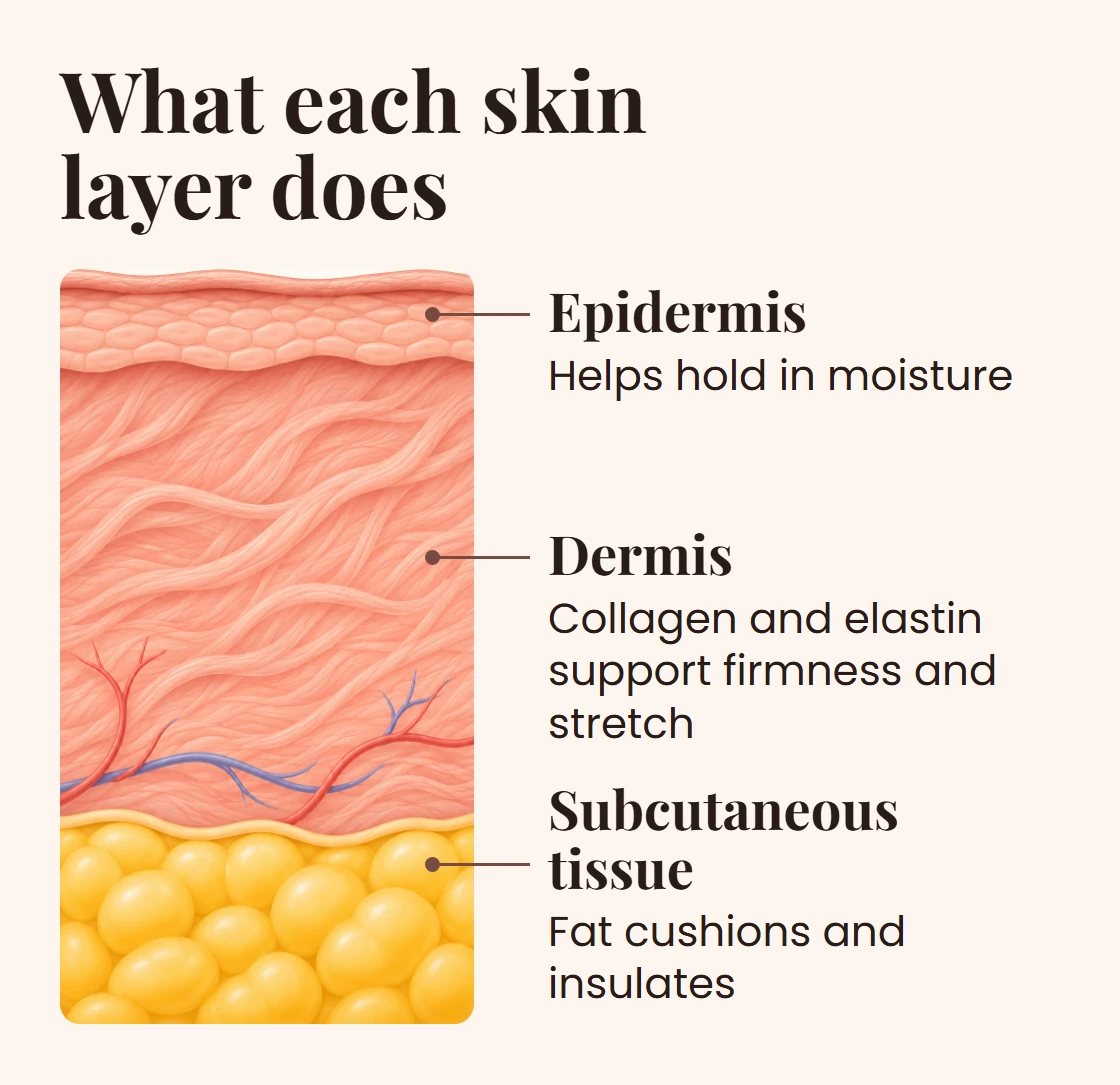
How hydration and collagen work together
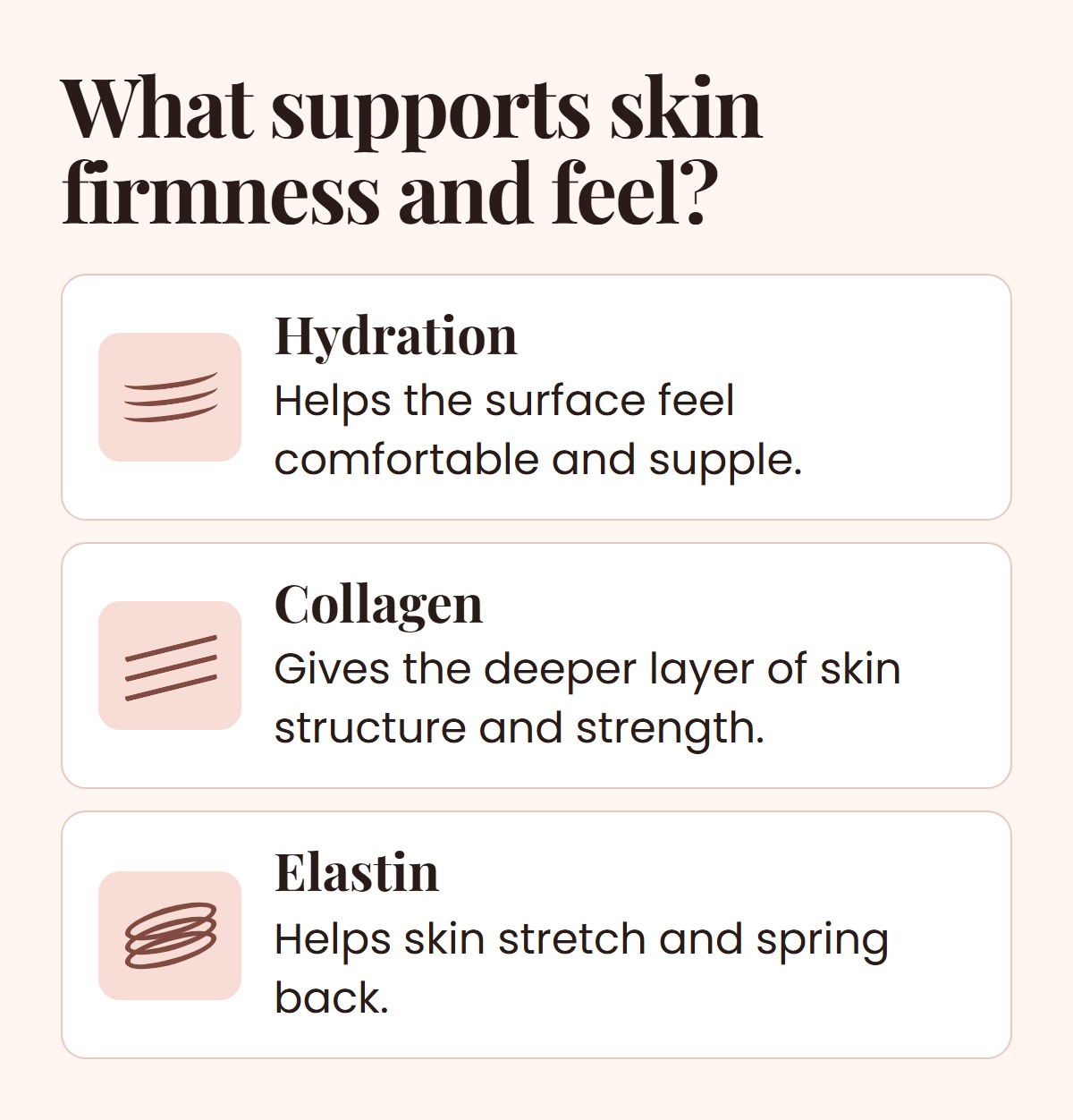
When your skin feels tight or rough, hydration is a good place to start. Keeping moisture in the outer layer helps your skin feel soft, comfortable, and supple. Collagen works deeper in the skin, where it provides structure and strength. Elastin helps skin stretch and spring back. The illustration shows these layers and the tissue beneath them. Read more about skin anatomy.
These roles complement each other. Your skin can feel well hydrated even as firmness changes over time. A maintenance routine makes room for both goals by helping the surface hold moisture and limiting damage to the structure underneath.
Why collagen changes take time
In the deeper layer of your skin, cells called fibroblasts make collagen fibers. As part of normal upkeep, some fibers break down and new ones take their place. Mature collagen turns over slowly. One study estimated a half-life of about 15 years for mature skin collagen, which gives a sense of how long those fibers can stay in place. Read the collagen turnover study.
With age, more fibers become fragmented, and years of UV exposure can add to that damage. That gradual shift helps explain why firmness changes over time. Moisturizer works on a different timescale because it helps the surface hold water, so changes in how soft or comfortable skin feels can show up sooner. Read the research on collagen changes in aging skin.
Build a routine you can keep up with
Start with a moisturizer you like using. Applying it after cleansing, while your skin is still slightly damp, helps hold on to moisture. Pay attention to how your skin feels between washes. If it regularly feels tight, that’s a useful sign to revisit your cleanser or moisturizer.
Make sun protection part of your morning routine. UV exposure contributes to collagen damage over time. In a randomized trial, people who used sunscreen daily had less visible skin aging over time than those who used it at their discretion. Read the sunscreen study. If your skin starts to feel different as the weather changes, our fall skincare guide shows how to adapt that same routine.
What food contributes to collagen production
Your body uses amino acids from dietary protein to build collagen. It also needs vitamin C to make collagen. Beans, lentils, tofu, eggs, and fish are examples of protein-rich foods. Bell peppers, citrus, strawberries, and broccoli can help you get vitamin C. See the NIH guide to vitamin C and food sources.
A practical way to put this together is to include both in meals you already enjoy. Try lentils with roasted bell peppers, tofu with broccoli, or eggs with a side of fruit.
Do collagen supplements help skin?
Collagen powders and capsules often contain hydrolyzed collagen, which means the protein has been broken into smaller pieces called peptides. Some trials report improvements in skin hydration or elasticity after several weeks. Results vary across products and studies.
A 2025 analysis found that the apparent benefits for hydration, elasticity, and wrinkles disappeared when the authors looked only at trials without pharmaceutical company funding. For now, collagen supplements are optional, and the size and durability of any benefit remain uncertain. Read the analysis of collagen supplement trials.
Make hydration and collagen part of your routine
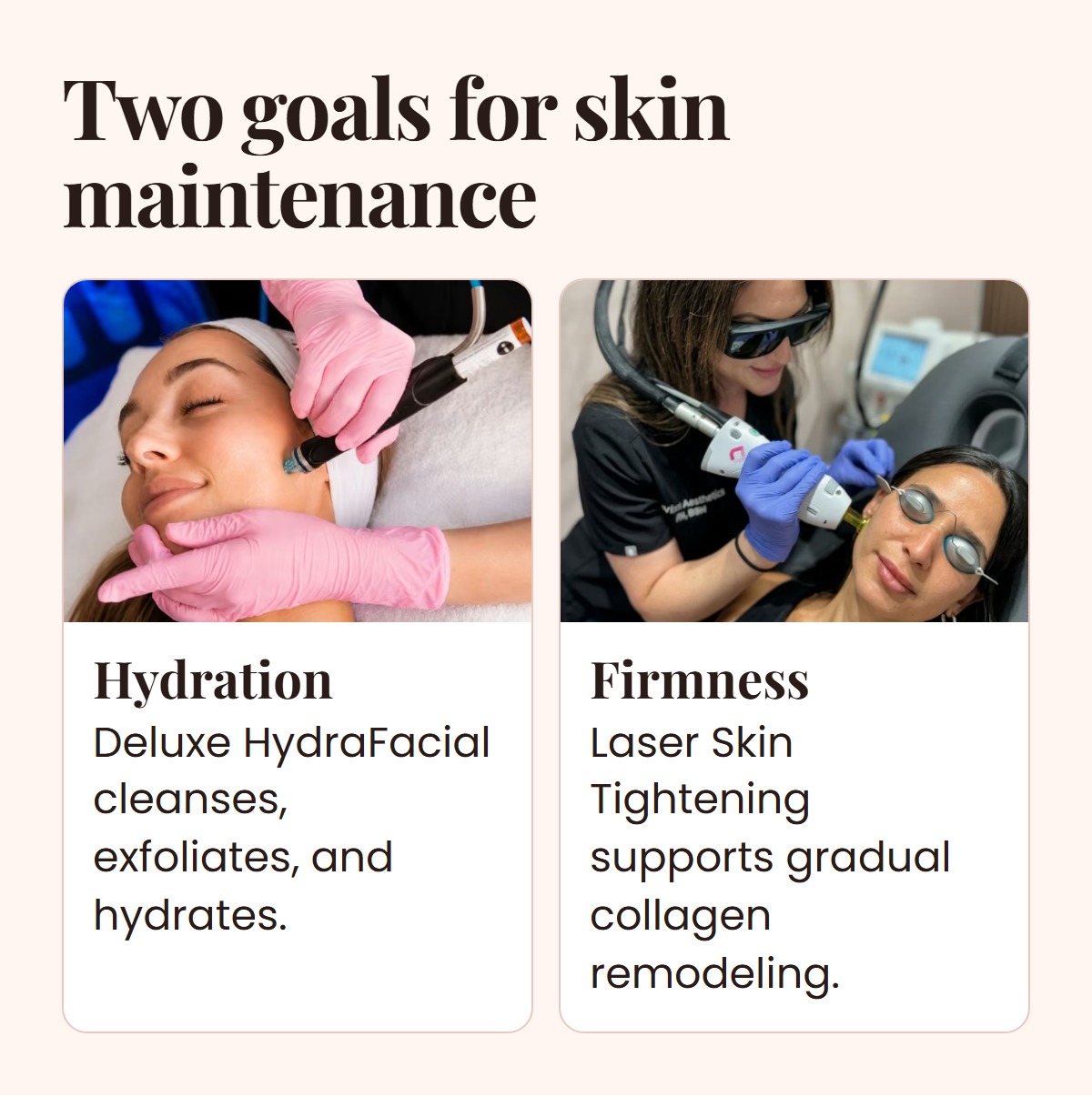
Daily moisturizer and sun protection are the foundation. If you’d like to add regular professional care, the Cleanse & Tighten facial membership gives you a monthly visit with a choice of two treatments. Choose a Deluxe HydraFacial for cleansing and surface hydration, or a Laser Skin Tightening Facial to support collagen remodeling and firmness over time.
You can switch between the two at each visit as your priorities change. If monthly visits feel too frequent, the every-other-month option offers the same choice with one visit every two months.
When a targeted treatment might make sense
If you have a specific concern, start by naming it. How We Approach Skin explains how color, texture, volume, and elasticity help organize different concerns. For example, roughness is a texture concern, while how well skin springs back relates to elasticity.
A hydrating facial such as HydraFacial focuses on cleansing, exfoliation, and surface hydration. For more on surface care, see our comparison of HydraFacial and chemical peels.
For changes in firmness, some nonablative laser treatments aim to stimulate collagen remodeling. A small study of one such laser found changes in collagen fibers and measured improved elasticity after a series of treatments. If uneven texture or visible sun damage is the main concern, a clinician can discuss whether laser resurfacing fits that goal. Read the laser study.
For cheek smoothness, SKINVIVE by JUVÉDERM is an injectable hyaluronic acid gel that the FDA approved for adults over 21. An analysis from its clinical study also found improved cheek hydration at one month. Read the FDA’s study summary.
Patient reviews
Real patient feedback helps
you understand the experience.
Read current reviews from Corinne Aesthetics patients before choosing where to start.
Keep reading
Related treatment guides.
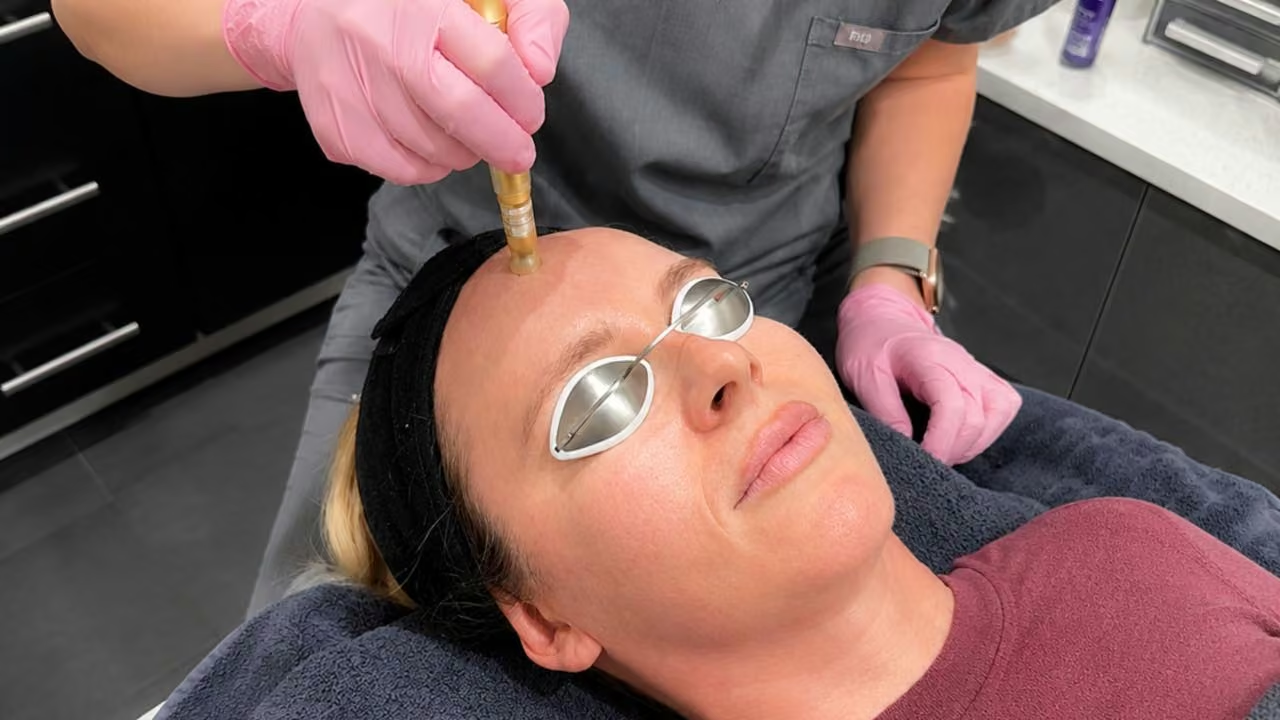
Microneedling
Microneedling for Acne Scars in Thousand Oaks: What To Expect
What microneedling can and cannot do for acne scars, why collagen remodeling takes time, and how packages and recovery planning usually work.
Read Blog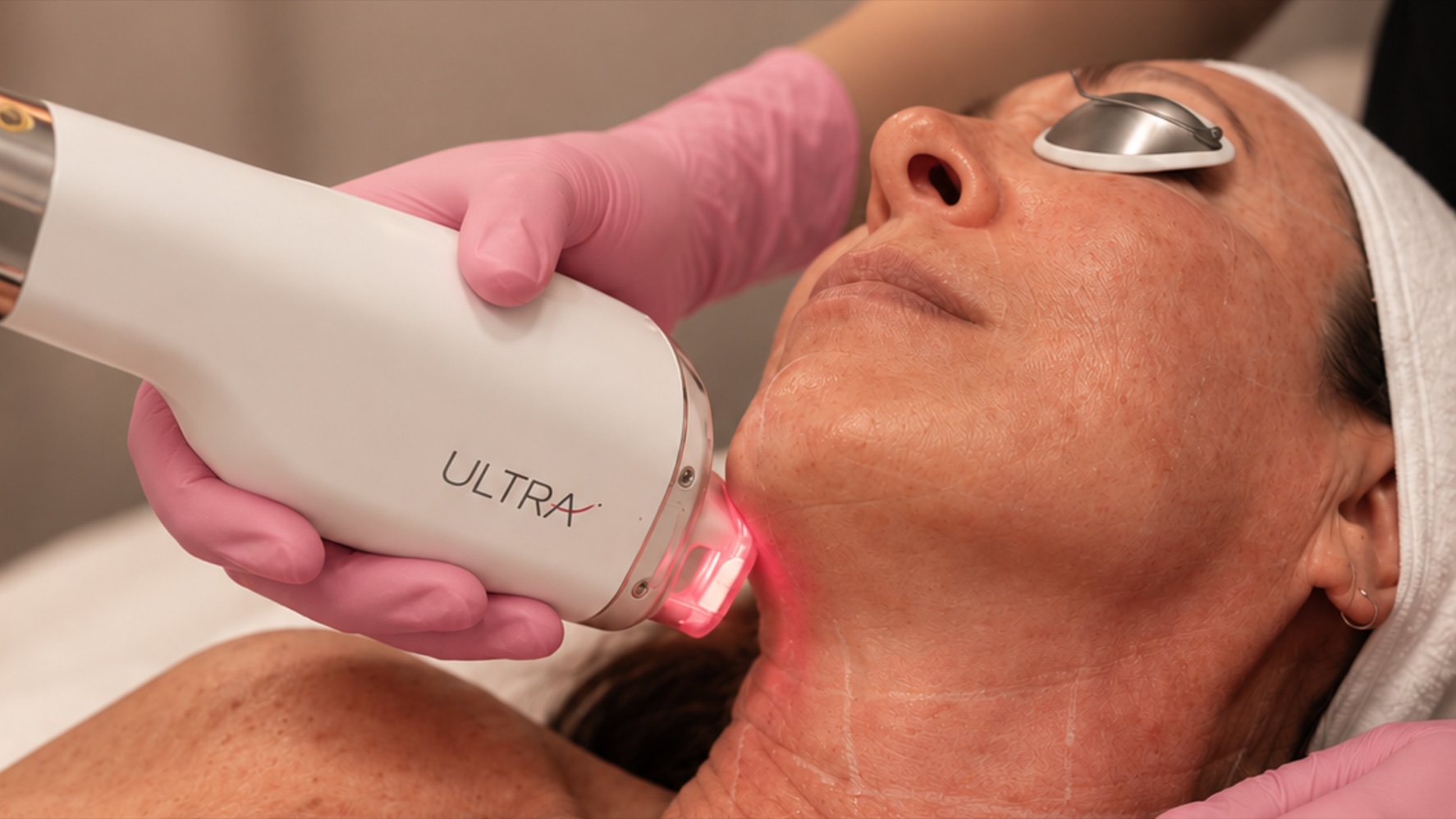
Laser Skin Resurfacing
1927 nm Thulium vs. CO2 Laser Resurfacing: What’s the Difference?
A practical comparison of non-ablative 1927 nm thulium and ablative CO2 laser resurfacing—how each treats the skin, the concerns they can address, and the recovery involved.
Read Blog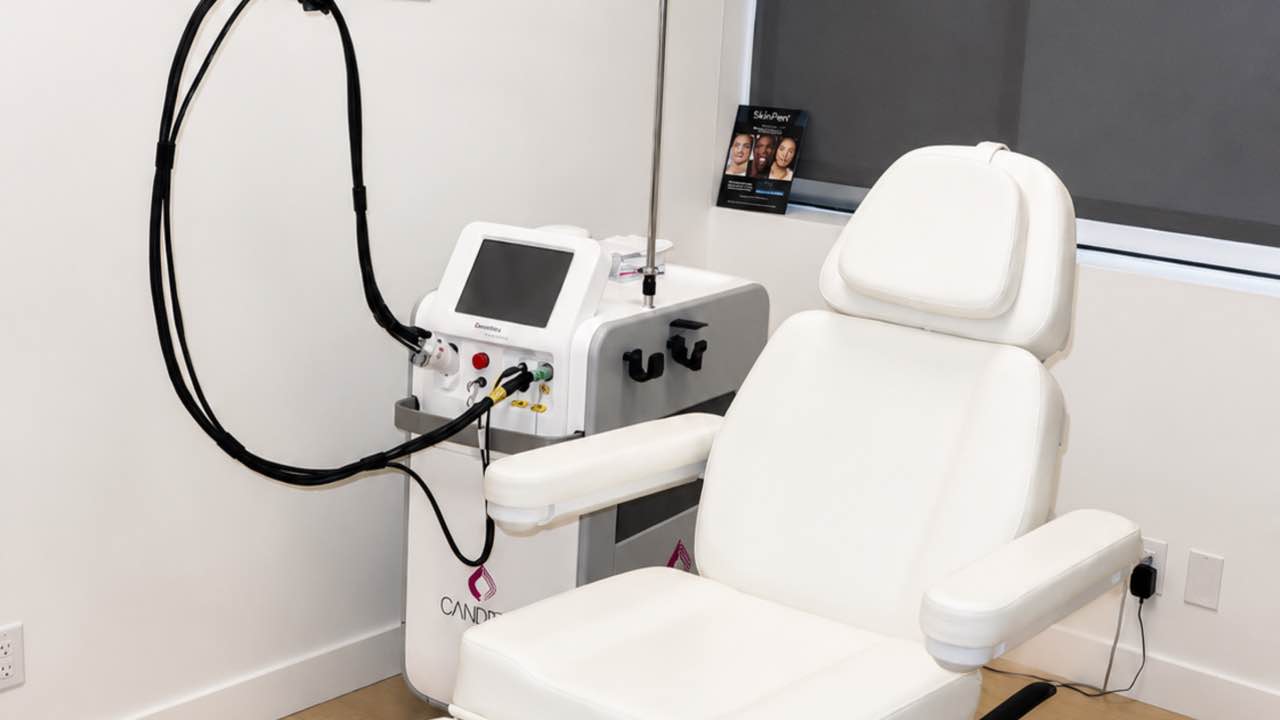
Laser Hair Removal
What Should a Good Laser Hair Removal Clinic in Thousand Oaks Have?
A practical checklist for comparing laser hair removal clinics in Thousand Oaks, from medical-grade technology and provider experience to consultation quality, cooling, safety, and realistic expectations.
Read Blog